
Las Vegas heat puts real pressure on your house. When the attic isn’t properly insulated, outdoor heat moves through the roof, warms the rooms below, and forces the air conditioner to run longer than it should. During cooler desert nights, weak insulation can also let indoor warmth escape. The result is uneven comfort, higher energy use, and extra wear on heating and cooling equipment.
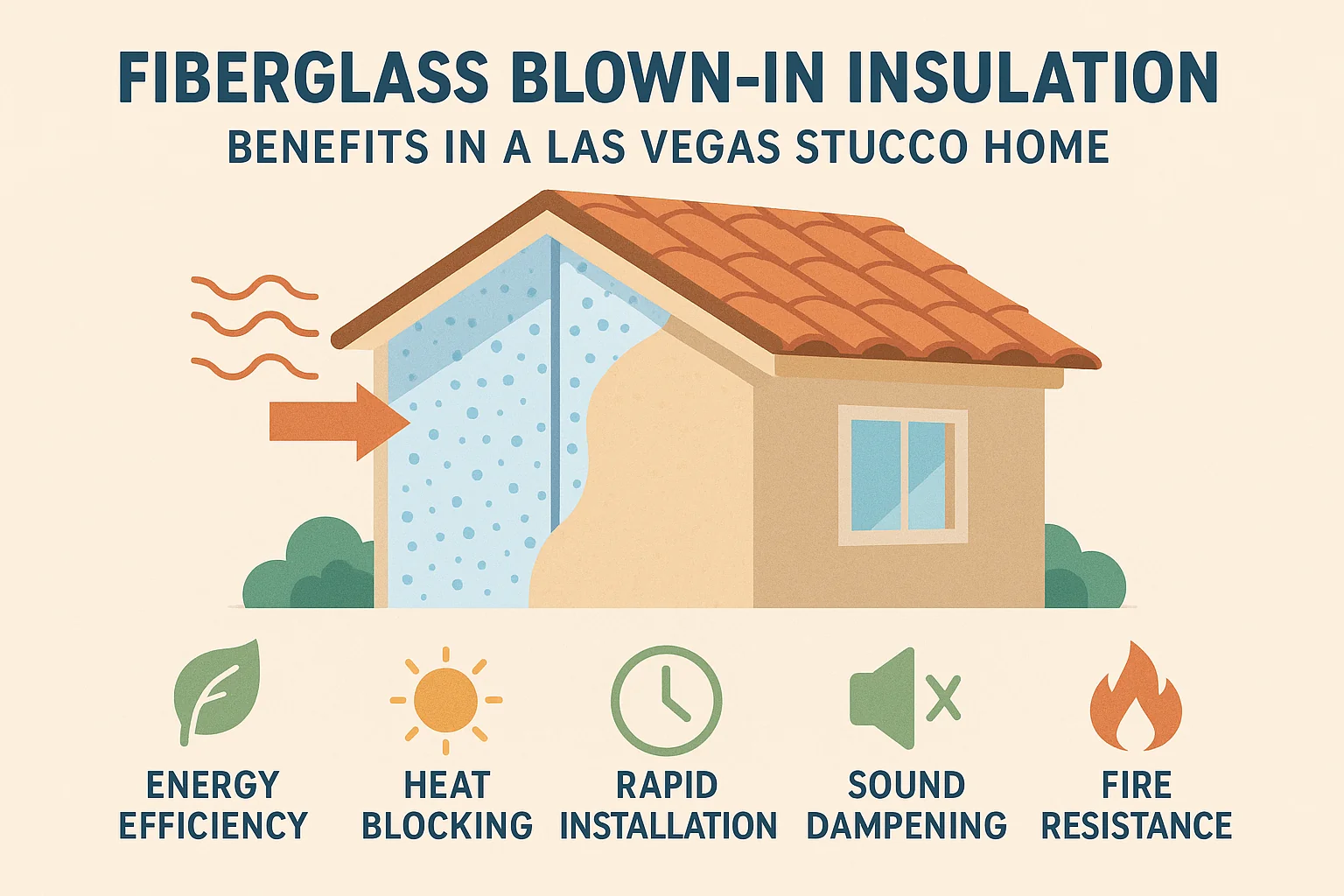
Fiberglass blown in attic insulation is a practical way to improve comfort in homes with older, thin, settled, or uneven attic insulation. Because the material is installed as loose fill, it can reach around joists, wiring, pipes, ductwork, and irregular spaces where gaps often form. That full coverage helps slow heat transfer and supports a more stable indoor temperature.
Air Pro Master helps Las Vegas homeowners choose attic insulation that fits the local climate, the home’s layout, and the condition of the HVAC system. With trained technicians and experience across air conditioning, heating, plumbing, and insulation, the team looks at the full comfort picture, not just the attic.
Why Attic Insulation Matters in Las Vegas
Your attic is one of the main areas where heat enters and leaves the building. In summer, roof surfaces absorb intense sun for hours. That heat collects in the attic and pushes down into living areas. Without enough attic insulation, the cooling system has to fight that heat gain all day.
A properly insulated attic creates a thermal layer between the living space and the roof deck. It helps keep conditioned air where it belongs and reduces temperature swings from room to room. Bedrooms, upstairs spaces, and rooms directly below the attic often feel the biggest improvement.
Good insulation also supports HVAC performance. When less heat moves into the living area, the air conditioner can cycle more normally. That can reduce stress on motors, coils, ductwork, and other components. For Las Vegas homes, where cooling demand can stay high for much of the year, reducing that strain matters.
Attic insulation can also support indoor air comfort. Gaps around attic access points, wiring penetrations, ducts, and framing can allow dust and unconditioned air to move into the home. Blown material helps cover many of those hard-to-reach areas when paired with proper sealing and installation practices.
Homeowners often think about insulation only when energy bills rise, but it also affects daily comfort. If one room feels hot while another feels cool, or if the AC runs constantly but the house still feels warm, the attic may be part of the problem.
How Blown-in Insulation Works in an Attic
Blown-in insulation is installed with specialized equipment that sends loose fill material through a hose and spreads it across the attic floor. Instead of placing rolls or pre-cut pieces by hand, technicians can distribute the material evenly across open areas and into tight spots.
Blown-in fiberglass is made from fine glass fibers. The fibers trap air pockets, which slow heat movement. That trapped air gives the material its insulating value. When installed at the right depth and density, it creates a consistent blanket over the attic floor.
This method is useful in older Las Vegas homes because many attics have obstructions. Ducts, pipes, recessed light areas, framing, low-clearance sections, and uneven joist spacing can make traditional insulation harder to place neatly. Loose fill can flow around those shapes and cover irregular spaces with fewer voids.
For best results, technicians inspect the attic before installation. They look for low insulation levels, gaps, moisture concerns, pest activity, duct issues, and areas where air sealing may be needed. Adding insulation over hidden problems can reduce performance, so the inspection step matters.
A typical install blown-in process may include:
- Inspecting the attic, access points, ducts, vents, and existing material
- Sealing obvious air leaks where appropriate before adding new material
- Protecting ventilation paths so airflow remains open
- Blowing the material to the planned depth and coverage level
- Checking for even distribution around corners, beams, pipes, and ductwork
- Cleaning the work area and reviewing the finished attic with the homeowner
Blown-in fiberglass can often be added over existing fiberglass batts when the old material is dry, clean, and free of major damage. If insulation is wet, moldy, pest-damaged, or heavily compressed, removal may be recommended before new material is installed.
Fiberglass Attic Insulation Compared with Other Materials
Choosing insulation materials should be based on climate, attic layout, budget, moisture risk, and long-term performance. Fiberglass works well for many Las Vegas homes because it’s lightweight, non-combustible, and well-suited for dry attic spaces.
Cellulose is another loose fill option. It’s made from treated recycled paper and can provide solid coverage, but it’s heavier than fiberglass and may settle over time. In areas where moisture is a concern, wet or damp cellulose can lose performance and may need attention.
Foam insulation is used in some homes, especially where air sealing is a major goal. It can perform well in the right application, but the insulation cost is often higher. It also requires careful installation and is not the right fit for every attic design.
Mineral wool offers strong fire resistance and sound control. It can be a good product for certain applications, but it may cost more and can be less common for standard blown-in attic upgrades.
| Material | Best Fit | Considerations |
|---|---|---|
| Blown-in fiberglass | Attics with gaps, uneven areas, and dry desert conditions | Lightweight, good coverage, often cost-effective |
| Cellulose | Loose fill projects where recycled content is preferred | Heavier, can settle, moisture can affect performance |
| Foam | Projects needing strong air sealing in select areas | Higher cost, requires careful product selection |
| Mineral wool | Fire resistance and sound control needs | Often higher cost, may not fit every attic plan |
| Fiberglass batts | Open, easy-to-access areas with simple framing | Can leave gaps if cut or placed poorly |
For many Las Vegas homeowners, blown-in fiberglass offers a strong balance of coverage, cost, and durability. It fills around obstacles better than many batt layouts and can restore insulation depth without major construction.
Cost, R-Value, and Installation Planning
The cost of attic insulation depends on several factors. Home size, attic access, existing material, needed depth, labor, ventilation, and any prep work can all affect the estimate. A simple top-off project may cost less than a job that requires removal, air sealing, or repairs before installation.
R-value measures how well insulation resists heat flow. A higher R-value means greater resistance. The right R-value for your attic depends on local code guidance, home age, current insulation levels, and comfort goals. In Las Vegas, the goal is usually to reduce summer heat gain while helping the home hold conditioned air.
A professional attic evaluation helps determine the right plan. Technicians measure the current insulation depth, look for thin or missing areas, and check whether existing materials can remain. They also look for problems that may need to be fixed first, such as disconnected ducts, blocked vents, roof leaks, or signs of pests.
Insulation works best when it’s part of a full home comfort strategy. Your attic, ductwork, AC system, heater, thermostat, and plumbing lines all share the same environment. When attic temperatures are better controlled, ducts and pipes may face less extreme heat. That can help reduce wasted energy and support system reliability.
Air Pro Master can also look at related HVAC and plumbing concerns during the service process. That matters because a poorly insulated attic may hide duct leaks, weak airflow, or hot rooms that seem like AC problems but are partly caused by heat transfer from above.
A well-planned project should answer these questions before work starts:
- How much insulation is currently in the attic?
- Is the existing material clean, dry, and safe to leave in place?
- What R-value target makes sense for the home?
- Are air leaks, ducts, vents, or access points affecting performance?
- What will the project cost, and what’s included in the estimate?
A clear estimate should explain the material, coverage area, expected depth, prep work, and any related recommendations.
Signs Your Home Needs New Blown-in Attic Insulation
Insulation problems often show up through comfort and energy issues before you ever look in the attic. Some signs are easy to notice during daily use. Others require a technician to inspect the space safely.
Common signs include:
- Energy bills rising without a clear change in usage
- Rooms below the attic feeling hotter than the rest of the house
- AC running for long cycles during normal summer weather
- Uneven temperatures from room to room
- Drafts near ceiling penetrations, attic hatches, or upper rooms
- Insulation that looks thin, patchy, compressed, or uneven
- Moisture stains, mold concerns, or pest activity in the attic
- Dustier indoor air or musty odors near attic access points
- Ducts or pipes exposed with little surrounding coverage
- Outdoor noise becoming easier to hear inside
If the attic has older fiberglass batts, they may have shifted, compressed, or been disturbed during past service work. Even small gaps can reduce performance because heat moves through the weakest areas first.
Moisture should never be ignored. Wet insulation can lose insulating power and may point to roof leaks, plumbing issues, condensation, or ventilation problems. Pest damage also needs attention before new material is added. Covering damaged insulation without fixing the source can lead to repeat problems.
A professional inspection gives you a clearer answer. Air Pro Master technicians can check the attic, explain what they find, and recommend whether you need a top-off, removal, replacement, or related HVAC service.
Schedule an Attic Insulation Evaluation
Blown-in fiberglass is worth considering if your home feels hard to cool, your bills keep rising, or your attic insulation no longer provides steady protection. It can help reduce heat transfer, improve comfort, support HVAC performance, and make better use of the conditioned air you already pay for.
Air Pro Master brings Las Vegas homeowners a practical service approach backed by HVAC, heating, plumbing, and insulation experience. The team can review your attic, check related system concerns, and help you choose a solution that fits your home and budget.