
White buildup makes your faucets look dirty. Shower glass gets spots that no cleaner can get rid of. Even though you use good soap, your skin feels dry after you shower. Your tankless water heater has already needed one costly descaling service. The dishwasher leaves a film on the glasses. You change the showerheads every year because mineral buildup slows the flow to a trickle. Has any of that happened to you? If so, an ion-exchange water softener may help.
These aren’t just annoying things that look bad. Summerlin’s very hard water, which has an average of 16 to 18 grains per gallon, is silently wearing down your home’s mechanical assets and raising your monthly costs.
Most people who own homes think that hard water is just a normal part of living in the desert and don’t think about whole-home water softening as a costly luxury. An ion-exchange system may very well be the right solution for your needs.
How hard is the water in Summerlin?
Water hardness is the amount of calcium and magnesium that is dissolved in water as it flows through limestone and gypsum deposits. About 90% of the water in the Las Vegas Valley, including Summerlin, comes from Lake Mead through the Colorado River. The river travels through old seabeds and mineral-rich rock before reaching your tap.
The water in Summerlin has 16 to 18 grains per gallon (GPG), which is the same as 278 to 304 parts per million (PPM). In comparison, the national average is between 60 and 120 PPM. The mineral levels in Summerlin are more than twice the national average and well above the 180 PPM level that defines “very hard” water.
Your home’s water contains almost two tablespoons of dissolved rock minerals in every gallon. This very high concentration makes sure that mineral precipitation can’t happen. It always happens when water heats up or evaporates.
What Hard Water Can Do to Your Home
Scale builds up all the time in water heaters, tankless heat exchangers, faucets, shower valves, dishwasher heating elements, and washing machine parts. Over time, these deposits slow down the flow of water, make heating elements work harder to get through the insulating mineral layers, and speed up the wear and tear on parts, which shortens the life of appliances by a lot.
What an Ion-Exchange Water Softener Really Does
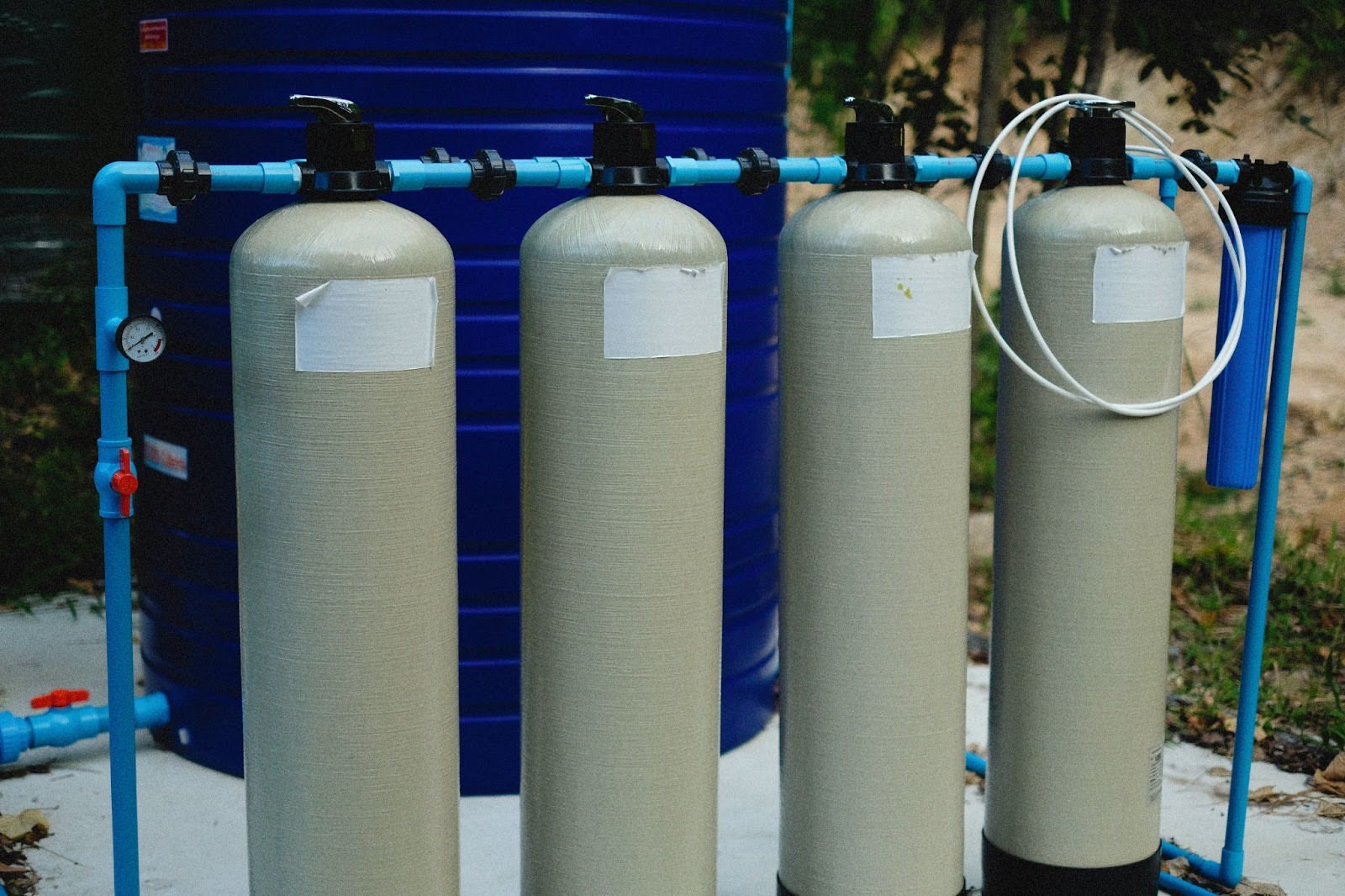
Ion-exchange water softeners have tanks that are under pressure and filled with polystyrene resin beads that have sodium or potassium ions on them. When hard water enters the tank, calcium and magnesium ions, which have stronger positive charges, push sodium or potassium ions out of the resin beads.
Then, the calcium and magnesium ions then attach to the beads and release sodium or potassium into the water stream.
This process replaces “hard” minerals with “soft” ions that don’t make scale. Moreover, they don’t make soap less effective.
When the resin beads are full of calcium and magnesium, regeneration cycles flush concentrated brine solution through the resin bed. This pushes hard minerals off and recharges the system so it can be used again.
What The Ion-Exchange Softener Doesn’t Do
Ion-exchange softeners don’t filter out general contaminants. They don’t get rid of chlorine, heavy metals, or biological pathogens unless they are used with activated carbon or other types of filtration media. Softeners don’t clean drinking water to the same level as reverse osmosis (RO) systems. They are mostly tools for protecting infrastructure, not full purification solutions.
The Real Costs of Hard Water in a House in Summerlin
Heating water is the second most expensive thing you can do with your home energy. Hard water serves as thermal insulation, directly undermining this system. Studies show that gas storage tank heaters lose about 4% of their efficiency for every 5 GPG of hardness. At Summerlin’s 17 GPG, this means that the efficiency will drop by almost 14 percent permanently from the moment the scale forms.
Electric water heaters have even bigger problems because scale builds up directly on the heating elements that are submerged, which makes them use 22 to 29 percent more energy. In Las Vegas, the average lifespan of a water heater is 12 to 15 years in soft water, but only 6 to 8 years in Summerlin’s hard water.
This costs homeowners an extra $1,200 to $2,500 every few replacement cycles. That’s a big reason why an ion-exchange system can be the solution.
Wear and tear on appliances
Dishwashers build up scale on their heating elements and spray arms, which makes them less effective at cleaning and makes the motors work harder. Mineral deposits can damage valves and seals in washing machines, which can cause leaks to happen too soon. Mineral buildup in small-diameter tubing can block icemaker lines, which means you need to hire a professional to clear them.
When you use hard water that hasn’t been treated, the average lifespan of your appliances goes down by 30 to 50 percent. This means that you’ll need to replace every water-using appliance in your home sooner, thus costing you more money.
Plumbing issues
Scale buildup inside pipes makes the inside diameter smaller, which causes a noticeable drop in pressure and flow rate. Mineral buildup can cause showerheads to lose up to 75% of their flow rate in less than 18 months. The internal cartridges of faucets and shower valves get pitted and calcified, which means they need to be replaced often and at a high cost.
Waste from personal products
Calcium and magnesium neutralize the active ingredients in soaps and detergents, which means that families have to use up to 35% more of the product to get enough lather. Studies show that families use more than 50% less detergent once softeners are put in. This saves them $200 to $400 a year on cleaning supplies, laundry detergents, and shampoos. Mineral residue on skin and hair makes them dry, which means you need to buy expensive moisturizers and conditioners to make up for the effects of water.
How to figure out the ROI of a water softener in Summerlin
Average cost of installation
The total cost of installing whole-home ion-exchange softeners depends on the size of the system and how complicated the plumbing is. Most Summerlin homes have “soft water loops” already plumbed into their garages, which saves a lot of money on labor. Common ranges for investments:
- Water softener unit (basic to premium): $400 to $3,000
- Cost of professional installation work: $150 to $1,000
- If you need to change the plumbing, it will cost between $0 and $1,500.
- Inspections and permits: $50 to $300
For high-quality systems with professional installation in homes with existing soft water loops, the total initial investment is usually between $1,500 and $3,100.
Estimated yearly savings
Once installed, softeners start saving money right away in many areas. For families of four in Summerlin:
- Restoring the efficiency of your water heater can save you $50 to $200 a year on energy costs.
- Savings on consumables from using less soap and detergent: $215 to $360 per year
- Water heater, dishwasher, and washing machine life expectancy: $240–490 per year (amortized costs of not having to replace them)
- Plumbing maintenance that keeps you from having to call for service or replace parts costs $100–200 a year.
- Estimated yearly savings: $600 to $1,250. It’s entirely possible that these could save you plenty of money indeed.
Analysis of the payback period
It takes 2 to 4 years for mid-range systems with a total installed cost of $2,500 to reach ROI. Since professional-grade ion-exchange systems last 15 to 20 years, these systems save money for 11 to 18 years after the initial investment is paid off.
ROI goes up faster in homes with tankless water heaters, large families that use a lot of water, or homes that are bigger than 2,500 square feet, where the cost of fixing appliances and plumbing is higher than normal.
When a Water Softener is the Best Choice for Your Money
Tankless water heaters in homes
Tankless units are very likely to fail because of scale. Tankless systems in Las Vegas can break down in just 3 to 5 years without softeners, which voids the manufacturer’s warranty. Softening agents are a must-have for equipment worth $4,000 to $7,000.
It costs $150 to $250 a year to descale tankless units. This costs the same or more than a whole-home softener over ten years, but it doesn’t protect as well. When hard water scale isn’t treated, manufacturers like Navien and Rinnai will not honor heat exchanger warranties.
Benefitting families, benefitting homes
Families with four or more members get the best return on investment (ROI) from consumable savings and faster mineral accumulation from using more. Homes that are at least five years old and have scale buildup can benefit from gradual scale dissolution, which restores flow and pressure.
Hard water damage can cost a lot more in big homes (2,500 square feet or more) with more bathrooms and complicated plumbing.
When It Might Not Be Needed
Budget priorities may mean that repairs to the structure or safety must come before long-term softening benefits.
Small households (1–2 people) that don’t use much water may have to wait more than 7–10 years to get their money back. Renters or homeowners who plan to move in the next 12 to 24 months may not stay long enough to get the full return on their investment.
Ion-Exchange Conditioners vs. “Salt-Free” Conditioners
Real softening vs. scale conditioning
The only way to physically get calcium and magnesium out of water is through salt-based ion-exchange. Descalers, which are also known as salt-free conditioners, don’t get rid of minerals. Instead, they use technologies like Template Assisted Crystallization, which changes the physical structure of minerals so they are less likely to stick to surfaces.
Differences in performance under Summerlin conditions
Because Summerlin’s GPG hardness is so high (16-18), salt-free systems often have trouble showing clear results. They do protect your water heater to some extent, but they don’t save your hair, skin, or detergent like real softeners do. Many “salt-free” ads are misleading because they promise “soft water” without having to remove chemicals to get that label.
Real ion exchange removes all minerals, prevents glass from getting spots, improves soap lather, and requires salt to work. Conditioners leave minerals in the water, don’t do much to improve lather, reduce spotting, but don’t get rid of it completely, and don’t need much maintenance. However, they only work moderately well at Summerlin’s hardness levels.
How Much Does It Cost to Maintain a Water Softener
Salt refills: A family of four usually uses 40 to 60 pounds of salt every month. Annual salt costs between $84 and $120, or $7 to $10 per 40-pound bag.
- Water use: Systems use 20 to 70 gallons of water every time they regenerate, which is usually once or twice a week. This adds about $5 to $15 to water bills each year.
- How long resin lasts: Ion-exchange resin beads last for 10 to 15 years. Las Vegas has a lot of chlorine, which can cut this time down to 5–8 years unless carbon pre-filters protect the resin.
- Annual service: A professional inspection and cleaning of the brine tank every 12 to 24 months costs $100 to $150 and keeps it running at its best.
Those are estimates and averages, yes. But they demonstrate exactly how much an ion-exchange softener could help.
Why Summerlin Homeowners Hire the Pros
Getting the right size based on grain capacity and peak flow rates stops systems that are too small from regenerating too often or systems that are too big from wasting money.
Proper drain routing ensures code compliance by sending softener brine to sanitary sewers with the proper air gaps to prevent contamination.
Installing a bypass valve lets you use unsoftened water to fill a pool or water the lawn, saving salt and protecting plants that don’t tolerate it.
Knowing how to follow HOA rules can help homeowners avoid fines for putting their plumbing or discharge lines in the wrong place.
Professionals know how to do all of that. Moreover, they know how to do all of that quickly, efficiently, completely, and safely. It’s never worth it to try to handle this yourself.
Take Care of Your Investment the Right Way
For most families in Summerlin, whole-home ion-exchange softeners aren’t costs; they’re investments that pay off well. Systems usually pay for themselves in 2 to 4 years by protecting expensive appliances, using less energy, and cutting down on waste. They also save money for 15 to 20 years.
If you think it could help, call AirProMaster to set up a water hardness test. We offer free water testing, personalized ROI consultations that show you how much money you can save, and same-day installation that protects your home right away.
We offer expert water treatment solutions for desert conditions to Summerlin, Henderson, and the greater Las Vegas area. Call us today or schedule online at your convenience.